Friday, June 8, 2012

Getting Past Truthiness: Three Ways to Assess if You’d Be Happy (and Effective) at a Startup.

Startups inspire so much excitement that it can be easy to forget that working at one is not for everyone. When I assess candidates for “startup affinity,” I sometimes see Colbertian truthiness rather than real self-awareness about preferences and strengths. As you consider your career, it’s critical to identify what your interests and comfort zone really are, rather than what you want them to be or assume they should be. To do that, ask yourself these questions:

1. What’s Your Risk Tolerance?  You’ve probably thought through your financial risk tolerance in the context of managing your 401K and other investments. But as you consider whether a startup could be a good match for you, it’s critical you think about how much safety you need in other ways, as well. Being tasked with building value when a path has not been laid out yet is not for the risk averse. Ask yourself whether you could be comfortable making changes on your own, or if you feel more at ease executing an established plan. If the latter, a startup may not be the place for you. You have to be the kind of person more concerned with the positive growth aspect of a company than the possibility of a layoff — and that’s not everyone.

2. How Wide (and Flexible) is your Skill Range?  In Fortune 500 companies, employees develop deep skill sets in specific areas such as project management, process scale-up, or cost-effectiveness. Working in a startup, however, is all about finding and implementing (or managing the implementation of) solutions — whether the challenges you face fall under your previous expertise or not. In a startup, for example, the duties of a VP of Sales may include building and managing a team as well as direct selling, technical support, customer support, business development, and marketing. This is a dream to one person and a nightmare to another. And guess which belongs in a startup?

3. Are you a Grower or a Manager?  Creating something unique and amazing — even if that means thinking in entirely new ways — is a key motivator for entrepreneurial types. Consider whether you gravitate to the challenge of building something from the ground up, or if you’re attracted to managing well to continue sustained growth. Would you rather develop a business plan that dazzles customers and leverages everything your company has to offer, or would you rather work to deliver on part of the plan?

In the end, one set of preferences isn’t objectively better than the other — even though the amount of ink spilled about entrepreneurs might lead you to believe otherwise. Success can be had in a variety of ways, and in a variety of venues: going against your grain seldom results in value creation or career satisfaction. Whatever your professional preferences, know them for what they are, and don’t settle for what you think they should be. Remember: To thine own self be true. Not “truthy.”


Monday, May 14, 2012

What I’m Looking For: Three ways to define what you need in a critical hire.

Finding the right person for a critical position is a multistage, multifaceted process, but not one, as Bono sings that has to feel like "climbing the highest mountain."  It all starts with the hiring manager getting very clear and very specific about the qualifications and qualities that will bring value to the team and the company. It can be difficult to distill down exactly what you need, but it’s necessary – not only for writing the all-important job description, but also for knowing what to look for in candidates during the hiring process. In my experience, the three most important things to keep in mind are domain experience + success + chemistry.

1. Domain experience
Candidates often tout their flexibility and ability to learn new things, and there are indeed times when a company knows that some amount of retraining is inevitable.  For the most part, when training is a luxury of yore, it’s far better to seek industry-specific experience. If that sounds too picky, just consider how irrelevant next gen sequencing is to the in vivo imaging market—aside from matters of reimbursement, of course. If you can, go for candidates who understand the specific technology/market in which you play.

2. Success
It is one thing to have had experience in a particular job, and quite another to have consistently met or achieved goals. Look for candidates who can show they’ve knocked it out of the ballpark. Ask candidates to share success stories; expect them to bring ideas about how they can add value to the company or to their group if they are hired. Basically, find the consistent hit-makers like U2, not the one-hit-wonders.

3. Chemistry:
One of the most difficult elements to assess — because it’s completely intangible — is chemistry. On the one hand, Myers-Briggs philosophy would say that a team should have all kinds of different personality types in order to bring a full complement of skills to the table. Some employees should be high-energy and risk-taking, for example, some cautious and methodical. On the other hand, similar kinds of people can often work better together, especially if their working style reflects — or has been honed by — the culture of the company. Either way, think carefully about what type of employee and what working style will be effective in a particular role and on a particular team. 

It's easy as one, two, three.


Friday, April 20, 2012

How is your job search like an investment pitch?

The 8th Early Stage Life Science Conference last week in Boston was a fantastic event as usual. Organized by Abigail Barrow, Director of the Massachusetts Technology Transfer Center with support from Merck and Reid Leonard, Managing Director at Merck Ventures Fund, it offered a showcase of exciting early stage companies ranging from Bionic eyes, novel gene transfection approaches and cures for septsis and cancer. It included several impassioned presenters, talking about some novel ideas to advance healthcare - sure to get your inner geek on. But one of the most interesting talks was delivered by Richard Anders of Massachusetts Medical Angels - how to make pitches stronger. He was speaking about seed-round financing for early stage CEOs but his points are useful to job hunters. In the end, it's the same goal - how to make a more compelling pitch. Whether it is an infusion of cash for a Newco or closing on a new job, his points are noteworthy.  

1. Pedigree: Newcos must highlight strengths, experience and "know how" of the CEO and management team. The parallel for candidates is probably obvious. A good candidate must be comfortable talking about themselves and able to relate their experience and background in a compelling way. Talk about your education, work experience and why you are an "A player". Translate your strengths into how you can add significant value while minimizing risk for the company. Eric Gordon, CEO of Atentiv, a personalized digital learning tool company is the master. If you can ever see him pitch, don't pass it up. He has raised ~$116 million from investors and returned ~$1.4 billion in cash in 4 of 5 exits to investors and it shows.

2. Proof: Seed money is tight and so is the job market. According to Jeremy Halpern of Nutter McCleen & Fish, there is a massive decrease in seed stage deals - In fact, a 48% decrease 2010/2011 year on year, as venture funds go upstream to support later stage, less riskier companies. Now more than ever, an early stage CEO needs to demonstrate there is a market need for their product or a clear mechanism of why their solution works. A job candidate must do the same. No hand waving allowed. Early stage companies and candidates must clearly back up statements with proof and examples of success with solid metrics as well as third party validation. Be prepared to talk about your successes and what you have learned in the process. How would you translate those to the companies you are currently interested in joining? Who do you know and how valuable is the network you have built over the years to the companies you are interviewing with?

3. Get the story right: In a Newco presentation, the "story" must be focused and crisp. Too many new CEO's get lost in the details and forget to summarize how an approach solves a major unmet need. I have seen candidates do a similar thing and fail to communicate exactly where their expertise lies and how they may provide a unique skill set to a hiring organization. A great elevator pitch is key. In both cases, it is critical to communicate a compelling story. Practice. Practice. Practice. Just as a Newco CEO spends significant time on her/his presentation, job seekers should do the same. And if you do get it all right, there should be a pot of gold at the end of the rainbow.


Monday, April 2, 2012

Tips for College Students (aka - my future clients)

The job market is improving for those graduating from college these days especially for those who plan well. Here are 4 tips to improve your chances of landing a great job:

1. Think of your resume as a direct extension of you. It has the power to open doors or slam them shut. Go to your career office for free templates and advice. Really spend time on it. Share your draft with friends, family and professors until you get it right, and be open-minded to constructive criticism. When you are happy with how it looks be sure to save it as a PDF file so it does not get edited when you send it out to prospective employers.

2. It's never too early to start using Linkedin. If you are not familiar, it is like Facebook, only for work and professional networking. Never post anything that is less than completely professional. Write your profile then join relevant job groups such as your college group, groups associated with your major and other focus groups that you may be interested in. Most colleges/universities also have alumni groups which can be very helpful if you are looking for a summer internship or even an introduction to potential employers.

3. Skip the beach lifeguarding job during college summers and focus on landing an internship in your major. Even unpaid internships, if you can afford it, will give you great experience and make a big difference down the road when you graduate. Many colleges offer grants to pay for summer internships if money is a problem. This will give you the opportunity to see if you thrive working in certain environments and will beef up your resume. Network with your professors, use job boards such as Indeed.com, and contact friends/family to find connections and opportunities.

4. At the end of your summer job, ask for feedback on how you did and for advice on areas where you could improve. Ask your manager if they could be a reference for you in the future. Thank them for opening the door and giving you an opportunity to work in your chosen area. Hopefully you will be able to return the favor to other developing professionals later in your career.

Tuesday, March 13, 2012

Eureka! The personal genome gold rush gets going.

Recently I spent a highly energizing evening at the MIT Enterprise Forum in an Innovations Series Event called “The Future ofthe Personal Genome.”  Kevin Davies, Editor-in-Chief of Bio-IT World, moderated a panel of four leaders in the personal genome world: Colin Hill, CEO of GNS Healthcare, Mike Pellini, CEO of Foundation Medicine, George Church of the Personal Genome Project, and Jamie Heywood, Chairman of PatientsLikeMe.  Topics included everything from how to spur the public to see the benefit in personal genome sequencing to how to make this information more actionable in a clinical/healthcare setting. But what I was thinking was that the personal genome gold rush was finally beginning in earnest.

Three examples:

Bioinformatics: We have been talking about “drinking from the fire hose” since automated DNA sequencing began in the late 1980’s, but the rate of data generation today is amazing. What persists today is the challenge of interpreting all of this data. Illumina, LifeTech, Complete Genomics, and others, have an unprecedented need for computational biologists. High throughput biology is accelerating, as is the need for programmers, engineers, analysts, and architects. As I write, a small Cambridge-based company (and client), Knome, has seven positions open. Life Technologies has about twenty-three. Just about every company I looked at has an opening for at least one software engineer/programmer. Prediction: We will need to aggressively train new graduates in this area and poach from other technology sectors such as aviation, astronomy, and academia going forward.

DNA Diagnostic Leaders: Of course, blood gas measurements will never go away, but the new opportunity is for genomic scientists and commercial people who can usher in new genomics tests, while respecting current medical practice, privacy issues, and reimbursement requirements. Consider, for example, companies like Foundation Medicine, which are sequencing patients’ individual tumors to deliver on the promise of personalized medicine. Or Good Start Genetics, next-gen sequencing for routine genetic-carrier screening. Although the technologies are potentially game-changing, the challenges of incorporating these new approaches into existing healthcare paradigms remains, and we need people with experience gaining FDA approval and selling to the clinical market. Don Hardison, CEO of Good Start Genetics, has addressed this challenge by hiring many of his former team members from Exact — people with solid molecular diagnostics experience, to complement some of the NGS expertise in the company. Prediction: There are not enough people with DNA sequencing and diagnostics experience to feed these new companies. Cross-training classic diagnostic experts with NGS experts will be the wave of the future. Lots of opportunities moving forward especially for recent graduates.

Sales & Marketing: The platform race is accelerating. Companies such as Oxford Nanopore and Nabsys will continue to develop cutting-edge solutions and will need commercial leaders to bring products to market. Oxford Nanopore is searching for a VP of Sales as I write. Darren Lee just started at Nabsys this week as VP of Marketing and Business Development, and I am sure NobleGen, GenapSys and others are not far behind in their recruiting efforts.

These are just a few areas. When you remember the potential jobs in related fields such as education, clinical genetics, and patient care, you realize that the opportunities starting to open really could be of a gold-rush scale. Look for the confirmation of these positive trends — many of them associated with increased personal genome activity — in the soon-to-be-released new edition of the edition of the US Department of Labor’s Occupational Employment Statistics (OES) survey for 2012-13.

 And saddle up, everybody — thar’s jobs in them thar genome hills!


Wednesday, January 18, 2012

Highlights of the JP Morgan Healthcare Conference 2012

There’s never a better way to kick off a new year than to join the mobs descending on San Francisco for the annual JP Morgan Healthcare Conference —especially after a year that saw its ups and downs. The place was teeming with investors trying hard not to think of the European financial situation; with companies in search of funding; with industry leaders, insiders and observers of all stripes. And every one of them networking furiously. It’s biotech’s version of mass speed dating. At JP Morgan, if you don't have an invite, you can still get in on the action. Lots of conversations happen on street corners, in wildly-packed hotel lobbies, and during receptions (over a glass or two) at some off-site venue.

Some of the highlights this year, official and not, included exciting announcements, progress on the Next Gen Sequencing front, and of course cost containment & acquisition plans for 2012.

Mixed news
First the good stuff. Noubar Afeyan, who was celebrating his nineteenth JP Morgan conference, looked jubilant after the announcement that Flagship Ventures closed Fund IV. At $270 million, Fund IV is the largest fund yet in the Flagship portfolio. Watching what he is doing with JOULE and with talented people like David Berry is just plain fun. Can't wait to see how he spends his money.  In more Flagship news, on Monday, one of Flagship’s portfolio companies that’s near and dear to my heart, BG Medicine, announced a new CEO: Eric Bouvier, PhD. It’s going to be an exciting place for Eric to be, as BG seems to be making true headway with its transformative galectin-3 and AMIPredict diagnostic tests.

Obviously, after a year like this, there was some gloom. Francis Collins named one of the elephants in the room, talking about decreased NIH funding (down significantly from nine years ago). The odds today are that new investigators only have a one in six chance of funding, as opposed to the one in three chance of years past. On the positive, Dr. Collins shared his excitement over the plethora of new discoveries made every day by scientists. He also described the objectives of the new NIH Institutes and the $140 million partnership between NIH and DARPA to develop a chip-based approach to drug toxicity testing. One growth area surely seems to be on the molecular diagnostics side, with Qiagen, Cepheid, Gen-Probe and others all launching new tests and/or platforms.

Next Gen Sequencing forging ahead
Another positive: As a big fan of the $1000 genome efforts, I was happy to hear about Life Technologies’ Proton Torrent announcement of the $1000 genome instrument. It was also great to see Illumina fired back with its instrument upgrade announcement. The latter was perhaps smaller news, but the larger story — that this is a technology space jumping with activity — is all good. One of the biggest buzzes seemed to be about the PacBio news that Hugh Martin is out and Mike Hunkapiller is now CEO. The word is that this is not as abrupt as it looks. Mike apparently has been working closely with the PacBio team for quite a while. And of course, Mike has a plan. We wish him the best of luck in his new capacity.

Tough 2011 but solid plans for 2012
Many of the presentations reflected just how tough last year was, with NIH grant scarcity and very cautious customers. But what struck me was how persistent, tough, and never-say-die this industry really is. Frank Witney, CEO of Affymetrix, gave his update about his company’s difficulties in the last half-year. Even with a 20% cut in R&D as a cost savings measure, however, he remains bullish about their CytoScan HD product.

Thermo also announced cost-savings programs. The $55M they save will offset reduced customer spending and NIH cuts. Perkin Elmer revealed that no new acquisitions will be made until they finish the Caliper Life Sciences integration. Fluidigm is focusing on expanding into new market segments including cell culture, molecular diagnostics, and protein expression as well as will be considering acquisitions in the future. All in all it seems that companies remain optimistic and continue to look for creative ways to be successful.

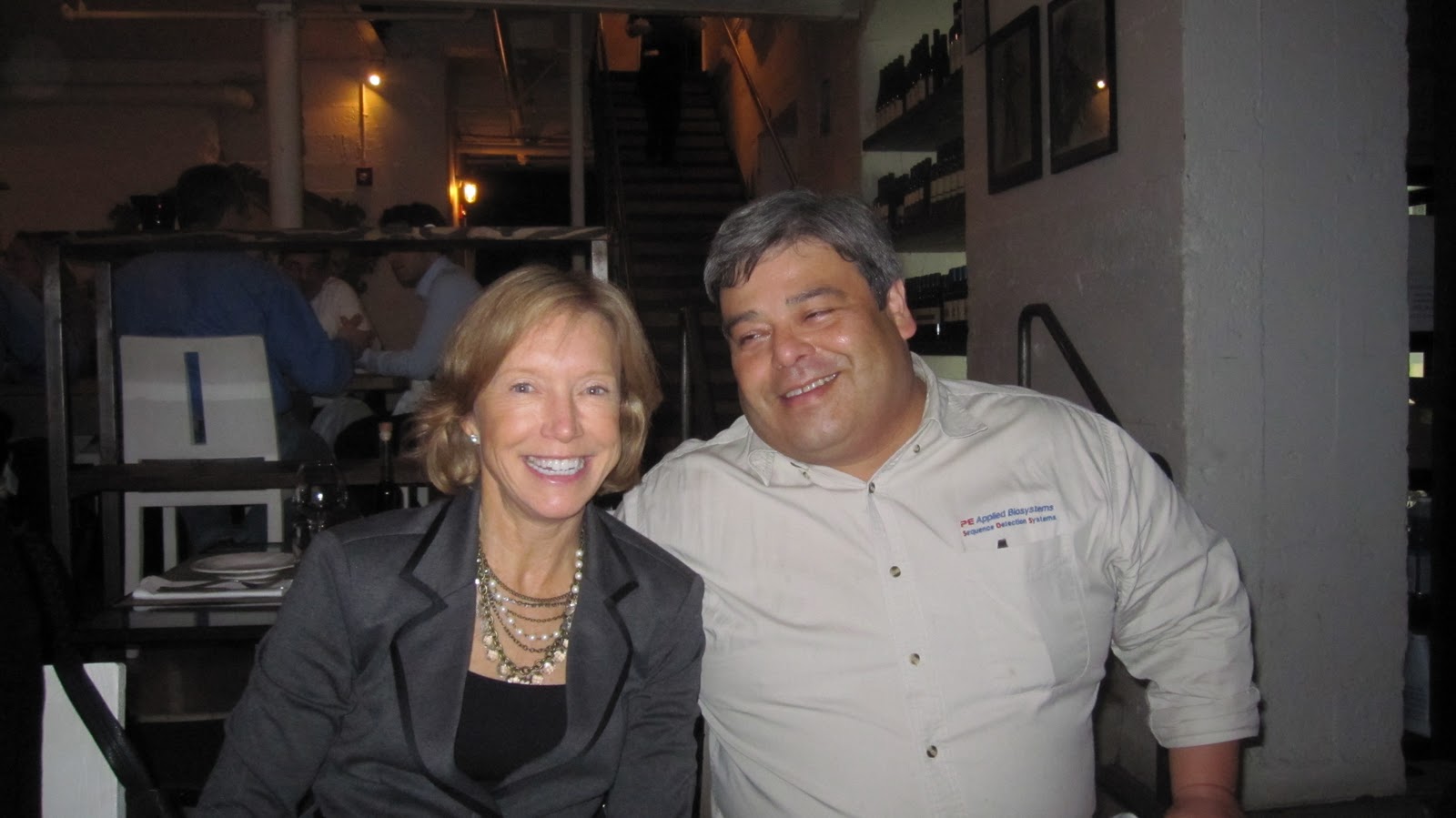
Taking a break On the personal side, one of the highlights of my JP experience this year was an unofficial Applied Biosystems (ABI) get-together that Linda Avey (cofounder of 23 & Me now CEO/founder of Curious, Inc) and I hastily planned. She’s something special, with entrepreneurial star power to spare and plenty of courage to shake things up. Makes me remember how fortunate I was to work with Linda and many of the others that were able to join us. What good friends I made: impressive professionals and wonderful people who work hard to make a difference in life sciences and human health.


Sunday, January 1, 2012

Five Old-Fashioned New Year’s resolutions every bioscience worker should make.


It's been yet another roller coaster of a year in the bioscience industry: lots of excitement, but some real lows, too. PerkinElmer acquired Caliper, but announced layoffs. Pacific Bioscience, a high flyer early in 2011, is perhaps now plummeting to earth: it laid off 130 workers. Even the golden child of life science tools, Illumina, has had sluggish sales and recently announced it will shed 8% of its workforce. Sometimes it’s not easy to hang on, much less enjoy the ride.

Not surprisingly, I get many calls from people looking to find a new job in the short term and/or to optimize career options for the long term. They ask what they should do. My answer? “A lot.” Specifically, a lot of fundamentals. We may be doing work at the edge of the possible, folks, but the old-fashioned basics still really count — and it never hurts to be reminded of them. So here they are: the five old-fashioned resolutions every bioscience worker should make for the coming year. Along with visiting the gym more (and the soda machine less), of course.

Resolution 1: Do your job. As much as career concerns can loom, focus on your current work and do the absolute best you can. Be mindful of corporate goals and your manager’s needs — and just plain get things done. Ask for feedback and try to incorporate that feedback into your approach. Remember that most positions and companies have ups and downs. Sometimes patience and perseverance make a huge difference, sometimes moving on is best. But don’t let deciding between them interfere with your performance. And emulate Harry Truman’s buck-stops-here philosophy. Take responsibility. Don’t pass along problems – fix them.

Resolution 2: Look at yourself honestly. Set aside some time and systematically name your true strengths and weaknesses. Think about at which job you were happiest. What were you doing? One way to approach this task is to pen a five-page PowerPoint about your expertise, experience, and education. Include success stories and work products. Be specific. In these times, there are many people with "broad experience." Don't be afraid to show your domain expertise. Think of it as a quick way to introduce yourself – to yourself; even if you never present the PowerPoint directly to others, the activity itself will help you distill your professional essence in a highly communicative way and get clarity about what your next steps should be.

Resolution 3: Make new friends, and keep the old. We all get so focused on our own tasks that sometimes we forget to look up, see what’s going on in our industry and with our colleagues — even though knowledge and networks are critical to many career decisions. Subscribe to Genome News, attend local entrepreneurial events such as the MIT Enterprise Forum. If you are in San Francisco in January, network at the JP Morgan Conference. It’s a great opportunity to see new life science companies before they’ve made their splash, understand the community as a whole, and meet people who may be helpful. Reconnect with old colleagues. And while you’re at it, put down that sandwich you’re eating in front of the computer and make a lunch date!

Resolution 4: Help others. Make the effort. Introduce people to each other. When you hear of something that might help someone, pass it on. Go out of your way especially to assist those people who are unfortunately out of work. Remember — it can happen to anyone. Taking time to help another is not only the right thing to do, but may result in a helping hand if it’s ever your turn to need one. Stan Lapidus, CEO of SnyapDx, is a vocal proponent of this principle. It’s important, and it’s easier to follow than his other career advice (delivered with a grin, of course): “marry well.”

Resolution 5: Be grateful. We are all incredibly lucky to have chosen work in an industry that can directly or indirectly benefit to human health and well-being. Let's all make it count. As Francis Collins said in a recent interview, “[T]here has never been a more exciting time to get involved in biomedical research. This century, the 21st century, is going to be the time when we derive answers to questions that have vexed us for all of history. […] To be part of that process of discovery and application could be, I think, the most exciting way for somebody to spend their life.

Happy holidays to all, and to all a healthy, happy, and prosperous New Year.